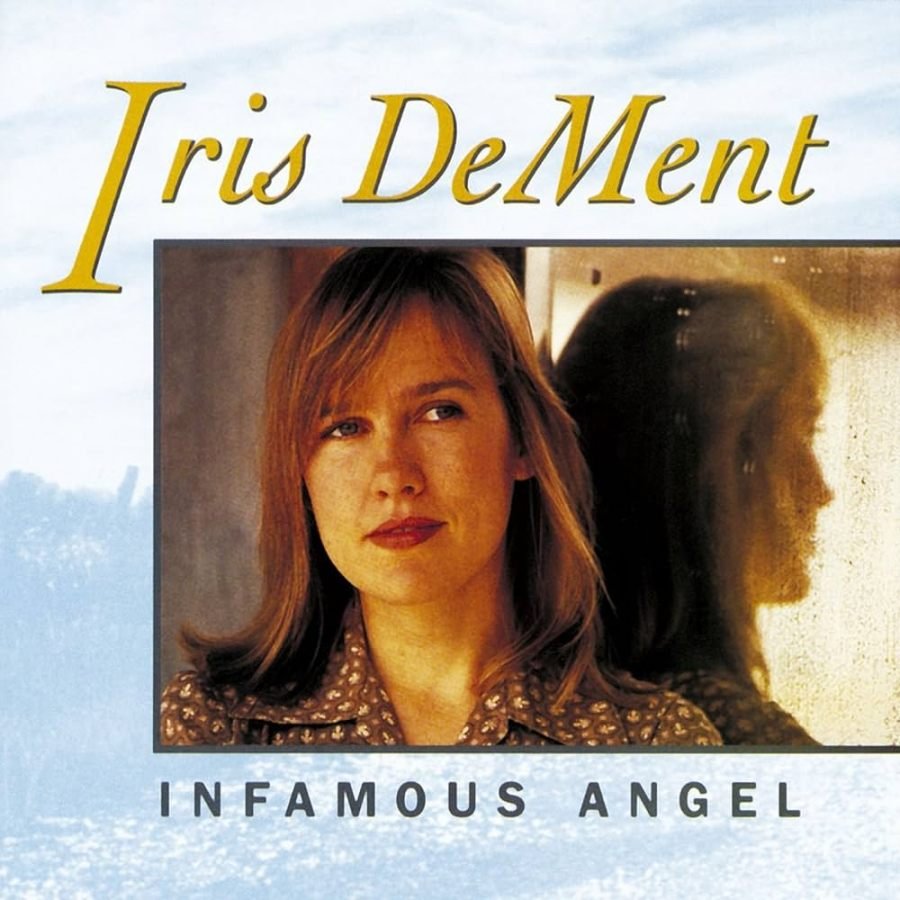
We began discussing the alternative country phenomenon in our last edition of this series, a complex movement formed by decades of influences and a desire to forge a different path away from country music’s mainstream. As a note, like with last time, a lot of the background for this review will be lifted from both my deep-dive into the movement as well as the first portion of my modern country music history piece.
Anyway, alt-country is usually a moniker meant to denote the classic country-and-punk fusion that formed in the late ‘80s and early ‘90s, but in truth, there were many musical alternatives to country music’s mainstream that formed around this time, full of artists looking to speak their own truths in their own ways. Here’s one example.
When we last examined this series, we discussed the growing alt-country movement mainly as a complete move away from country music’s mainstream. But the differences between the two worlds go a bit deeper than just one of sound. In a sense, the movement provided a home for disgruntled punks digging for their roots, but there were some acts, like Dale Watson, who didn’t think there was anything “alternative” about the hardcore country music they were playing. Mainstream country certainly favored an act like Watson during this time, who tipped his hat towards George Jones, Johnny Paycheck and Lefty Frizzell. But it still favored young blood, and Watson was far too old for the time.
That didn’t mean the influence wasn’t there. Mary Chapin Carpenter, for instance, took Lucinda Williams’ “Passionate Kisses” and turned it into a legitimate chart hit, as did Patty Loveless, with another Williams cut, “The Night’s Too Long.” We’ll discuss Williams again for this series in due time, but it’s this divide that also signaled another changing of the tide as country music’s mainstream favored young acts who could push the genre forward in new, exciting ways over older artists who had their time or weren’t “cool” enough any longer. For example, Johnny Cash’s American Recordings, produced by hip-hop and rock producer Rick Rubin, received more initial coverage from rock publications than anywhere else, and Merle Haggard and Tom T. Hall received tribute albums in the form of Tulare Dust and Real, respectively, from alternative artists.
Many alternative country artists argued that contemporary country music had abandoned its working-class heritage, and now spoke only to a suburban middle class. Some of these artists reclaimed country music icons and re-positioned them as punk ones, too, as already noted. There were also some, however, that resisted labeling the music at all. “If I never hear that term [alt-country] again, it would be too soon,” Neko Case once said. Robbie Fulks began using the term “descriptive country,” to confuse people. It was only critical of Nashville and nothing more. “I remember there was a big push in the early ‘90s to rid country music of any lingering Hank Williams feelings that it had,” Case once said, regarding mainstream country music’s direction in the early ‘90s. “There were ads like ‘All Country, No Bumpkin!,’ or ‘Not the Country Your Grandparents Listened To!,’ or ‘Nobody’d Dog Is Gonna Die!’ It was really stupid.”
Indeed, it’s hard to categorize every artist who made waves within country music during this time and wasn’t on a major label or received radio airplay, which is where another form of alternative country emerges that doesn’t draw on the same country-punk fusion. Even still, the ethos and general spirit is still there, meaning these artists likely had more in common with one another than one may think purely off sound alone. It was on the aforementioned Tulare Dust, in fact, that singer-songwriter Iris DeMent sang Merle Haggard’s “Big City,” his ode to the working person yearning for fun and freedom. Haggard loved it and found himself captivated by her voice, and found a kindred spirit through her take on Lefty Frizzell’s “Mom and Dad’s Waltz.” He wanted to record two of her songs for himself, and called her to ask whether she’d be interested in helping him learn them.
Suffice it to say, it didn’t take much convincing for DeMent, who grew up listening to Haggard the same way he had grown up listening to Frizzell – with a rare sort of admiration that fuels the decision to pursue a love for music. The youngest of 14 children of an Arkansas-fiddler and his gospel-singing wife, she was three when the family moved to find a better life in southern California. Raised with a strict Pentecostal upbringing, she broke away at age 16 to forge her own path, eventually making her way to Kansas City at age 25 to write songs. After financing a trip to Nashville in 1987 and coming under the tutelage of Emmylou Harris in the ‘90s, she released her debut album, Infamous Angel, in 1992, and received rave reviews for her emotionally stirring voice and lyricism that got intensely personal; songs like “No Time to Cry” and “Easy’s Getting Harder” arguably tell her story better than anything written about her. Several more critically acclaimed albums followed, and DeMent eventually found even more kindred spirits through collaborations with early supporters like John Prine and Steve Earle, among others.
Still, even with an album released just this year, one can nearly count the total number of DeMent albums on one hand. If anything, I think it makes them worth appreciating more as time passes by, particularly her excellent three-album run of the ‘90s. It’s also a fitting way to describe her work: like time capsules where one can hear her sing simple songs of common experiences in small towns as well as the complex emotions that come with simply living day-to-day, particularly through her reflections on death. Nostalgic in sound and presentation, for sure, but ultimately timeless and profound in the actual sentiment itself; the Haggard comparison already works, but so, too, does the Tom T. Hall one in how simple music can make a big impact (and for bonus points, Nanci Griffith was also an early supporter of hers).
And that’s basically the crutch of Infamous Angel, an album that shows an artist taking an honest approach to her craft who isn’t afraid to speak her mind or let her work play out almost as an autobiography – one where listeners are invited to view her world from her perspective, if only for a little while. In comparison with our last discussion on Uncle Tupelo’s No Depression, this certainly feels more in line sonically with tried-and-true country music. But there’s still something old-fashioned about the presentation that felt a bit purer and devoid of flash than DeMent’s mainstream contemporaries of the time.
And as someone who loves both worlds, I say that only to denote something different and all its own, rather than something better or worse. There’s just something immediate about that voice: warm and warbly with a frail, devastating echo that recalls the country-folk pleas of, say, the Carter Family or Kitty Wells. And while that’s also a note on the country-folk style with which DeMent operates for this album – particularly in the touches of gospel that shine in a lot of the earthy piano work – it’s not necessarily meant to be nostalgic. That’s kind of the other beauty, in that it’s old-time music with a modern perspective, where love no longer lasts forever and the small towns are all turning into ghost towns.
In a way, the album feels more lived-in and real because of that, where hope is found in earnest through the moments in between – a simple reflection of love on “Hotter Than Mojave In My Heart,” an equally calming love for home on “These Hills,” or the joy of old-time radio shows in spite of hard times on “Mama’s Opry” - and needed as a reprieve for the heavier blows dealt elsewhere – from a bittersweet loss of culture on “Our Town,” to the death of a loved one on “After You’re Gone,” to even a wayward woman trying to find her way back home on the title track.
It defies a lot of traditional looks at these sorts of small-town narratives, but mostly in ways that feel more honest. Really, by opening with a song in “Let the Mystery Be” that looks at the afterlife or promises of salvation as just mere possibilities and nothing to be certain of, it’s more about the odd nature of life and a lot of unanswered, open questions over any grand declarations. It’s simple, but there’s a layer of complexity within the subtext that helps pull you into that world and care about these characters as actual people.
In truth, I probably do prefer heavier, more interesting follow-up albums in My Life and The Way I Should that pushed greater boundaries lyrically and sonically. This is a very slow, ballad-heavy album that’s incredibly easy to appreciate but hard to return to in full, outside of killer standouts in “Our Town” and “Mama’s Opry.” And I’m not sure the softer touch always works to the benefit of cuts that needed a sharper edge, like the otherwise quaint depiction of a falling out on “When Love Was Young,” or the equally dull “Sweet Forgiveness.” Even still, this was a fantastic introduction to a generational talent, and another example of why country music was arguably at both its creative and commercial peaks during this era.
Join me next time, where we’ll further our discussion of the underground, with Son Volt’s Trace.


 The Musical Divide
That was great, just like a visit with an old friend, I enjoyed your take on alt-country and that is certainly the road I want to take for my music. I have not listened to a lot of Iris but I do like her. Her duet with John Prine for “in Spite of Ourselves “ was a perfect pairing. Good stuff!
LikeLiked by 1 person
Ha, thanks, Randy!
LikeLiked by 1 person