It’s been quite some time since our last discussion through this feature, and I apologize for that. If you’ve been following along with this feature in real time and need a refresher, we left off discussing the ‘90s country music boom – both through explosive, flashy mainstream entities such as Garth Brooks and Brooks & Dunn, as well as through more introspective ones who could manage to score hits on equal footing, like Mary Chapin Carpenter.
We’re switching things up from our initial schedule. I had originally planned to discuss Iris DeMent’s Infamous Angel album, but I’m saving that for next time, given that my overarching narrative for this series will flow better with this new order – something I couldn’t completely plan when I mapped out this series long ago. We’re actually going to make our return with an album not initially featured on the schedule, but is essential nonetheless in telling the complete country music story. It’s far removed from the mainstream, which is where we’ll stay for a bit to discuss artists worlds apart in sound, yet unified in their ultimate goal. As a note, background portions of this review will be mainly lifted from my deep-dive into alt-country from years back, as well as part one of my series on modern country music history. Looks like it’s time to lay this burden down.
It’s hard to imagine that some were displeased with country music’s commercial boom of the 1990s. Yes, the very same one that broke commercial barriers and proved why country music was always ready for the musical “big leagues.” For many, it’s still the pinnacle of the genre’s 100-year storied history: when the music was country in sound and upbeat in spirit and presentation, the women actually got their fair share of airplay, and when it was, you know, actually cool to like the music. What could be bad about any of that?
That’s a difficult question to answer, and I don’t think the boom is necessarily what started any reactive movements in country music. Truth be told, it’s always had an alternative side of artists who work away from the mainstream yet draw respect from fans and critics regardless. It’s also been traditionally harder to categorize these artists. Just look at an icon like Bob Dylan, or a country-rock pioneer like Gram Parsons. And from Parsons, look at folkie-turned-country artist Emmylou Harris. For further proof, take a look at Texas poets like Guy Clark or Townes Van Zandt. Look at how the chain then extends to ‘80s icons like Joe Ely and Jason & the Scorchers. It’s not a straight line drawn from one artist to the next, mind you, but rather an examination of how a certain free-spirited philosophy has carried onward.
In a sense, then, I think that just like how country music’s boom of the decade had its seeds planted long before, so, too, did its alternative movement. A new style of music would emerge in the early portion of the decade that would blend traditional country music with anything from bluegrass, folk, rock, blues, punk, soul, and jazz as a way for artists to draw on a variety of roots-music styles, or to provide a haven for those who preferred vintage sounds over contemporary trends. Even that doesn’t feel like an overall accurate description, but it’s close enough.
Still, it’s a complex discussion that branches off in multiple directions, where the various sounds that would emerge and evolve from others came to be known as many terms throughout its time (and is most commonly referred to as “Americana” today) Let’s stick with one for today: alt-country.
The moniker mainly tips its hat toward the success of rock acts in the ‘80s and very early ‘90s that broke through to the mainstream: Nirvana, R.E.M. and Smashing Pumpkins, among others. It also tipped its hat to the main influences of these artists, which could range anywhere from George Jones to the Clash. A common kinship arose between those acts and the ones that would rise in country music’s underground scene, a commonality in how they moved from struggling on independent labels and college radio stations to rising toward higher levels, albeit significantly different ones.
Punk-rock was the biggest influence behind the alt-country movement, a genre that prides itself on taking music down to a grassroots level and fostering performers who, while certainly not master musicians, had the passion and drive to care about the art first and foremost. Country music itself is about emotional expressions that are simple and honest, so the comparison isn’t too far-fetched. Even Dwight Yoakam received his start in Los Angeles, honing his craft by playing punk-rock venues and clubs with acts like X and the Blasters before making his way to Nashville.
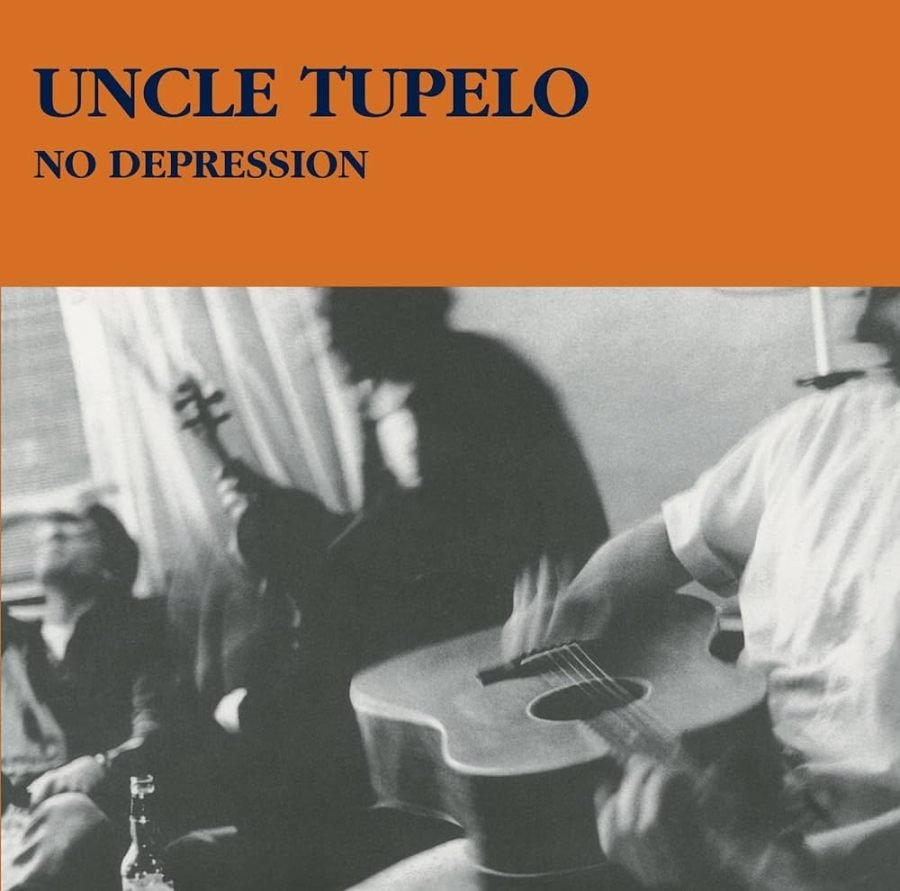
But the movement really exploded with Uncle Tupelo, a band comprised of high-school friends Jeff Tweedy, Jay Farrar, and Mike Heidorn, that, with its 1990 debut album, No Depression, combined hard-hitting punk influences with slow, twangy ballads cut from the country music cloth. The album’s title track was originally a Carter Family song from the Depression era. It would also go on to become the name for an Internet fan club chat folder on America Online. That same chat group would go on to form a bimonthly magazine called No Depression, which featured coverage of the burgeoning movement. The term itself was even used to describe the music and similar stylings of non-mainstream acts in Robbie Fulks and Lucinda Williams, along with Western Beat, twangcore, country and Westerburg and y’alternative. But no term stuck or really described the music itself that well as “alternative country” did. To put it another way, even if Uncle Tupelo didn’t directly influence a band musically around this time period, they certainly broke down the doors to help them succeed on their own terms.
So, OK, what exactly was all the hubbub about? That’s kind of the tricky thing when discussing Uncle Tupelo. They weren’t the first rock band to load country into their arsenal of songs, or the first punks to sing with a twang. But as I cued up No Depression in preparation for this piece once again, I got it. It’s a unique blend of sounds and ideas that had always run parallel to one another but had never sounded like a seamless combination until this album. As to be expected, it’s mainly driven by a young angst and small-town frustration that would make sense to ‘90s indie-rock ears. But with the way this band also sang about working class struggles and a reliance on the bottle for solace, it was easy to hear the country comparisons just as well as the rock ones.
I also think it’s all delivered in a simplistic manner that mirrors those country storytellers. Not simple as in uninteresting, mind you, but rather just plain and immediate in a way that goes down surprisingly easy, provided you’ve got an ear for the unlikely fusion of sounds. It’s a genesis that I think has inspired at least the drive and fervor with which country music’s underground operates today, but there’s also more to unpack with this conversation in later features. For now, then, we have a straightforward thrasher of an album that represents the general uniform quality and consistency with which Uncle Tupelo nailed in its short-lived career. Many argue that follow-up album Still Feel Gone was an even sharper display of instrumental prowess and songwriting skills, and the minimalist March 16-20, 1992 might stand as the more accessible release in this band’s catalog overall. Then of course there’s Anodyne, the band’s swansong that brought new players into the fold for a more expansive palette.
But there’s just something about that start of “Graveyard Shift” that makes this an easy revisit for me, a crunchy, head-banging lament of living a dead-end life in a dead-end town, where watching life pass you by is just a frustrating drag of a time. It’s kind of the crutch of the album that trades between thrashing, chunky grooves and a high-octane urgency for its simple songs about keeping one’s head above water. If I have to engage in this annoyingly evergreen debate, I will say I prefer Jay Farrar’s whiskey-soaked vocals that take most of the action here compared to Jeff Tweedy’s softer, thinner touch. It’s an album as equally rough around the edges and somewhat disconnected musically, where the brash, distortion-driven cuts in “Graveyard Shift,” “Factory Belt,” and “Outdone” stand more in tandem with more country-inspired cuts via the Carter Family title track, “Screen Door,” or “Whiskey Bottle” - a fusion they’d nail a bit better with later releases – but there’s still a consistency in spirit that threads this album together well, enough to where it makes talking more in-depth about individual cuts a tad more difficult.
It also feels somewhat intentional, given that this album mainly revolves around the slow grind of day-to-day life. For as monotonous as it is, it’s always fun to dream of a better alternative and how to get away from it all, which is why I personally love more blistering cuts like “Factory Belt” and “Outdone.” Although, when having to confront reality, sometimes a slower touch is also needed, like through the dreamy, liquid pedal steel accompaniment of “Whiskey Bottle,” where happiness is only found temporarily. Or take the darker, acoustic-and-mandolin-driven “Life Worth Livin’,” where those dreams of something more feel sadly for naught. Resolution may never actually come here – hell, the album ends with a song called “Screen Door” about watching the world pass by from the comfort of home – but we’ve all got our dreams and fantasies worth clinging to for some semblance of peace and balance.
Perhaps a bit on-the-nose, too, given that this band in its original incarnation broke up in 1994, with Farrar abruptly quitting the group and later forming Son Volt, and Tweedy taking the cast of players that joined him for Anodyne (including drummer Ken Coomer, multi-instrumentalist Max Johnston, and bassist John Stirratt) to form Wilco. Both would then push toward rock’s mainstream, but it’s hard to deny the impact Uncle Tupelo made in terms of the audience a band could reach without climbing that traditional ladder. That’s punk rock and country, man.
Join me next time, where we’ll discuss alternative country in a far different way, through Iris DeMent’s Infamous Angel.


 The Musical Divide
Very eye opening look at that time in Country music. Insight that has eluded me until now apparently. I never listened to a lot of UT but I’m seeing what you’re getting at.
LikeLiked by 1 person